

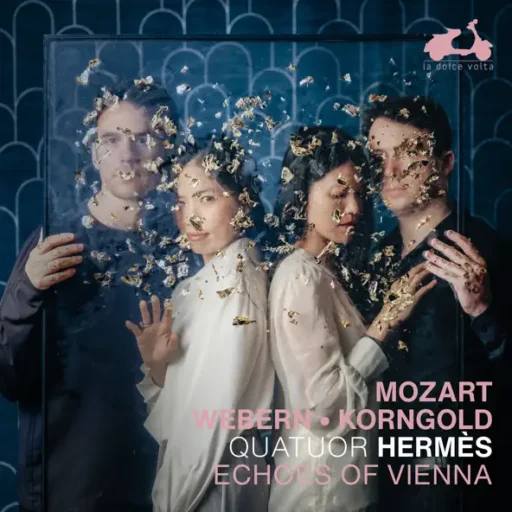
目录
| # | 曲目 | 时长 |
|---|---|---|
1 | String Quartet No. 15 in D Minor, K. 421 (Wolfgang Amadeus Mozart): I. Allegro moderato | 00:12:09 |
| 2 | String Quartet No. 15 in D Minor, K. 421 (Wolfgang Amadeus Mozart): II. Andante | 00:06:41 |
| 3 | String Quartet No. 15 in D Minor, K. 421 (Wolfgang Amadeus Mozart): III. Menuetto e Trio – Allegretto | 00:04:10 |
| 4 | String Quartet No. 15 in D Minor, K. 421 (Wolfgang Amadeus Mozart): IV. Allegretto ma non troppo | 00:09:37 |
| 5 | Langsamer Satz in E-Flat Major (Anton Webern): Langsamer Satz in E-Flat Major | 00:09:27 |
| 6 | String Quartet No. 2 in E-Flat Major, Op. 26 (Erich Wolfgang Korngold): I. Allegro | 00:06:53 |
| 7 | String Quartet No. 2 in E-Flat Major, Op. 26 (Erich Wolfgang Korngold): II. Intermezzo – Allegro con moto | 00:03:56 |
| 8 | String Quartet No. 2 in E-Flat Major, Op. 26 (Erich Wolfgang Korngold): III. Larghetto – Lento | 00:07:52 |
| 9 | String Quartet No. 2 in E-Flat Major, Op. 26 (Erich Wolfgang Korngold): IV. Waltz (Finale) – Tempo di Valse | 00:05:49 |
专辑简介
Vienna was in the grip of serious political unrest that forced many of its artists into exile when Erich Wolfgang Korngold (1897–1957) composed his Second String Quartet in 1933, first performed the following year in the Austrian capital. In it he celebrated, before it faded away, the vitality of a musical school of which Wolfgang Amadeus Mozart (1756–1791) had been one of the founders more than a century and a half earlier, and which Anton Webern (1883–1945) had helped to usher into modernity. It is this lineage that the musicians of the Quatuor Hermès (The Hermès String Quartet) highlight through a twilight-tinged programme in which each work bears witness to a fascinating narrative power and could be understood as an expression of a farewell.

