
目录
| # | 曲目 | 时长 |
|---|---|---|
1 | Prelude (Live) | 00:02:39 |
| 2 | Dalinda, Act I Scene 1, Viva la pace! (Live) | 00:03:02 |
| 3 | Dalinda, Act I Scene 1, Da poi che pace strinsero (Live) | 00:03:43 |
| 4 | Dalinda, Act I Scene 1, Vano terror discaccia (Live) | 00:03:35 |
| 5 | Dalinda, Act I Scene 2, Ranquillo ei posa (Live) | 00:04:32 |
| 6 | Dalinda, Act I Scene 3, Com’è bello! Quale incanto (Live) | 00:05:37 |
| 7 | Dalinda, Act I Scene 3, Ciel! (Live) | 00:02:53 |
| 8 | Dalinda, Act I Scene 3, Di pescatore ignobile esser figliuol credei (Live) | 00:03:20 |
| 9 | Dalinda, Act I Scene 3, Ama tua madre (Live) | 00:03:16 |
| 10 | Dalinda, Act I Scene 3, Gente appressa, io ti lascio (Live) | 00:01:35 |
| 11 | Dalinda, Act I Scene 3, Ugo d’Asti, quell’Ugo, son io (Live) | 00:04:52 |
| 12 | Dalinda, Act II Scene 1, Nell’ospital soggiorno (Live) | 00:04:57 |
| 13 | Dalinda, Act II Scene 2, E ancor vive colui? (Live) | 00:02:08 |
| 14 | Dalinda, Act II Scene 2, Ite, la mia vendetta e’ medita e pronta (Live) | 00:01:44 |
| 15 | Dalinda, Act II Scene 2, Tue voci a noi fian scorte (Live) | 00:03:24 |
| 16 | Dalinda, Act II Scenes 3 & 4, Il prigioniero è là – Così turbata? (Live) | 00:04:25 |
| 17 | Dalinda, Act II Scene 5, Che mai chiedi? (Live) | 00:04:37 |
| 18 | Dalinda, Act II Scene 5, Oh! A te bada, a te stesso pon mente (Live) | 00:02:51 |
| 19 | Dalinda, Act II Scene 6, Trafitto tosto ei sia (Live) | 00:01:05 |
| 20 | Dalinda, Act II Scene 7, Io di Dalinda ai prieghi (Live) | 00:03:09 |
| 21 | Dalinda, Act II Scene 7, Guai se ti sfugge un moto (Live) | 00:02:13 |
| 22 | Dalinda, Act II Scene 7, Or via, mesciamo! (Live) | 00:01:18 |
| 23 | Dalinda, Act II Scene 7, Infelice! Il veleno bevesti (Live) | 00:02:51 |
| 24 | Dalinda, Act III Scene 1, Dove mi guidi? (Live) | 00:02:49 |
| 25 | Dalinda, Act III Scene 1, Deh, gran Dio! (Live) | 00:02:46 |
| 26 | Dalinda, Act III Scene 2, Ferma, Ildemaro, a morte corri (Live) | 00:01:12 |
| 27 | Dalinda, Act III Scene 2, Torniam ancora fra l’esecrate mura (Live) | 00:02:15 |
| 28 | Dalinda, Act III Scenes 4 & 5, È bella la stella foriera del sol! – Mia madre qui sta (Live) | 00:02:46 |
| 29 | Dalinda, Act III Scene 6, Qual tradimento! (Live) | 00:03:06 |
| 30 | Dalinda, Act III Scene 7, Tu pur qui? non sei fuggito? (Live) | 00:03:53 |
| 31 | Dalinda, Act III Scene 7, M’odi, ah m’odi (Live) | 00:02:52 |
| 32 | Dalinda, Act III Scene 7, Ma gli amici? (Live) | 00:02:49 |
| 33 | Dalinda, Act III Scene 7, È spento, È spento! (Live) | 00:03:44 |
专辑简介
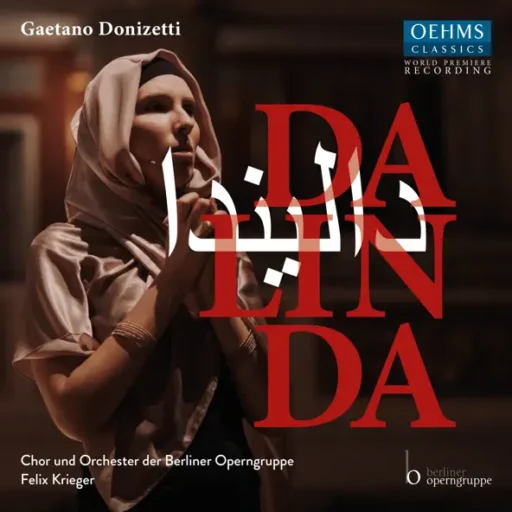
Dalinda was the result of Donizetti’s attempt in the Spring of 1834 to bring Lucrezia Borgia to Naples. The opera had been reasonably well received the previous year in Milan, but the Neapolitan censor was….well, highly censorious. He was especially outraged by the spectacle of Christian Frankish knights being invited to a peace banquet by an Islamic ruler only to be assassinated by poisoned wine. Four years of fretting over the adaptations demanded of Felice Romani’s libretto without receiving approval, a disappointment compounded by the banning of his new opera, Poliuto, and the insistence that he make substantial changes to its replacement, Pia de’ Tolomei, led to Donizetti becoming so angry and frustrated that he abandoned the score in the summer of 1838 and moved shortly thereafter to Paris where he was better appreciated. Dalinda lay forgotten in the archives and bits of it were lost or sold off, until musicologist Eleonora Di Cintio came across the remains and spent years painstakingly reassembling it from various sources and reconstructing it into a performable edition; it received its world premiere in Berlin in 2023, 185 years after its completion and this is the recording of that semi-staged production.
It is understandably similar in plot and much of its music to Lucrezia Borgia, but the setting has been transposed from 16C Venice to Persia during the Third Crusade and a fair amount of the music in the third and fourth acts was newly composed, including a female chorus, a long aria for the tenor Ildemaro and an arioso he sings before dying. The author of the notes and the performers are at pains to establish its modern relevance by emphasising its theme of religious intolerance and its prescience in depicting the ongoing conflicts in the Middle East. Well, maybe; but it is clearly true that even if to some degree it is capitalising upon the already established fascination of that era with “exotic” Ottoman settings, such as in Mozart’s Die Entführung aus dem Serail and several of Rossini’s operas, its depiction of historical and social context breaks new ground and it is daring in its inclusion of potentially scandalous events such as Christian men tearing off a Muslim woman’s veil and her bearing of a child by a Christian father before her second marriage to the Islamic potentate and the resultant clash of her divided loyalties. No wonder the censor got sweaty.
Not all of Donizetti’s operas are worthy of revival – he was a genius, yes, but also a compulsive workaholic who wrote too much too fast – so I approached this reconstruction armed with a degree of scepticism balanced by the fact that its predecessor, Lucrezia Borgia upon which Dalinda was based, is one of his finest operas. The performers here are the privately funded Berliner Operngruppe, founded in 2010 by their conductor Felix Krieger, which annually presents operatic rarities. The orchestra and cast are made up of professional freelance musicians, many of whom are recent graduates from music conservatories. There are four principal roles as per above and several smaller roles for male singers (see below).